
Dispatch & Scheduling
Scheduling and Routing
Plan the day on a clear calendar, move jobs quickly, and keep routing more organized.
View feature
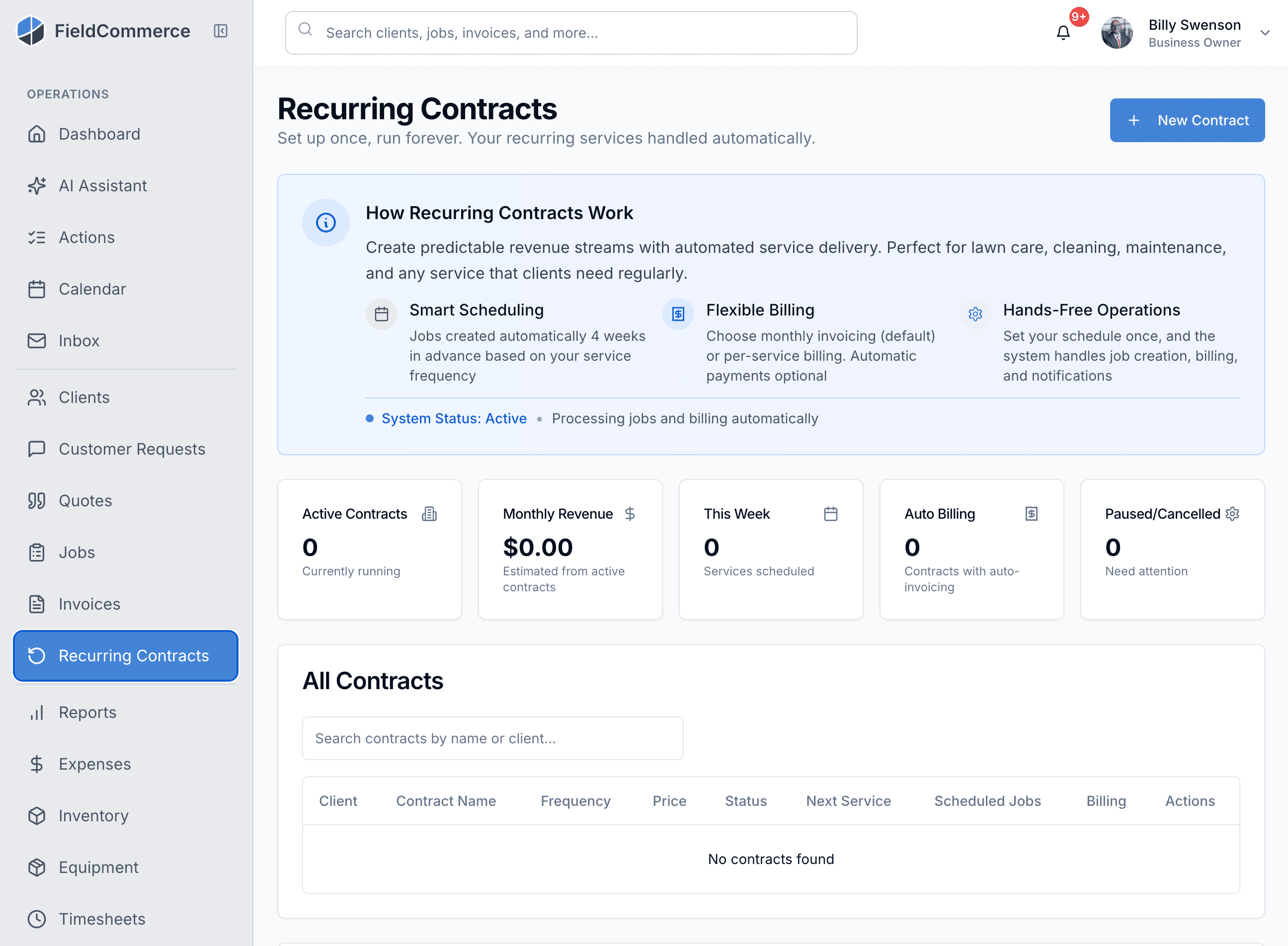
Organize recurring work, contract cadence, and billing with a cleaner system than ad hoc reminders.
For recurring service businesses, the real value is not just storing contract data. It is keeping the next job, invoice, and customer expectation aligned.
If these pains feel familiar, this feature is designed to remove them from the daily routine.
Recurring agreements are tracked in notes, calendars, and spreadsheets instead of one system.
Future work gets missed when contract cadence is managed manually.
Billing and service timing drift apart over time.
Renewal follow-up becomes reactive instead of organized.
From the first action to the finished outcome, this is the flow the team follows inside FieldCommerce.
Capture the recurring agreement structure so future work can be planned more intentionally.
Tie recurring service to scheduling and invoicing so the office is not rebuilding the contract every cycle.
Spot changes, lapses, and renewals before they turn into missed revenue or confused customers.
The biggest gains usually come from removing scattered manual steps, duplicate entry, and routine follow-up work.
Tracking renewal dates in a spreadsheet
Remembering which contracts need the next visit
Separating recurring billing from recurring work planning

Owners, office staff, and field teams each get something different from the same workflow.
Get better visibility into repeat revenue and reduce preventable contract churn.
Keep recurring jobs, exceptions, and billing cycles organized without side spreadsheets.
Show up with cleaner expectations for recurring work instead of rediscovering the contract every visit.
Straight answers on where this capability fits into the day-to-day workflow.
Trades with maintenance plans, repeat visits, or seasonal contract work. It keeps recurring revenue from being managed through side spreadsheets and memory.
It keeps recurring work, billing, and renewal timing connected so the team is not piecing the contract back together every cycle.
Basic scheduling handles single jobs. Recurring contracts handle the agreement behind the work, including cadence, renewals, and the long-term customer relationship.
These features usually matter next because they solve the connected admin and operations work around the same job.
Plan the day on a clear calendar, move jobs quickly, and keep routing more organized.
One tap turns the finished job into an invoice, and your crew collects with Tap to Pay on their phone, cash, check, or a text-to-pay link on the spot.
Keep company details, clients, invoices, and expenses aligned with QuickBooks Online.
See how the same workflow applies to the trades where it matters most.
Bring scheduling, customer communication, invoicing, and back-office work into one system that is easier for the whole team to run.