
Heating and Air Conditioning Business Software: The Flip
Heating and air conditioning business software has to survive the spring and fall flip, when every customer is due a visit. What a 1 to 8 truck shop should test.
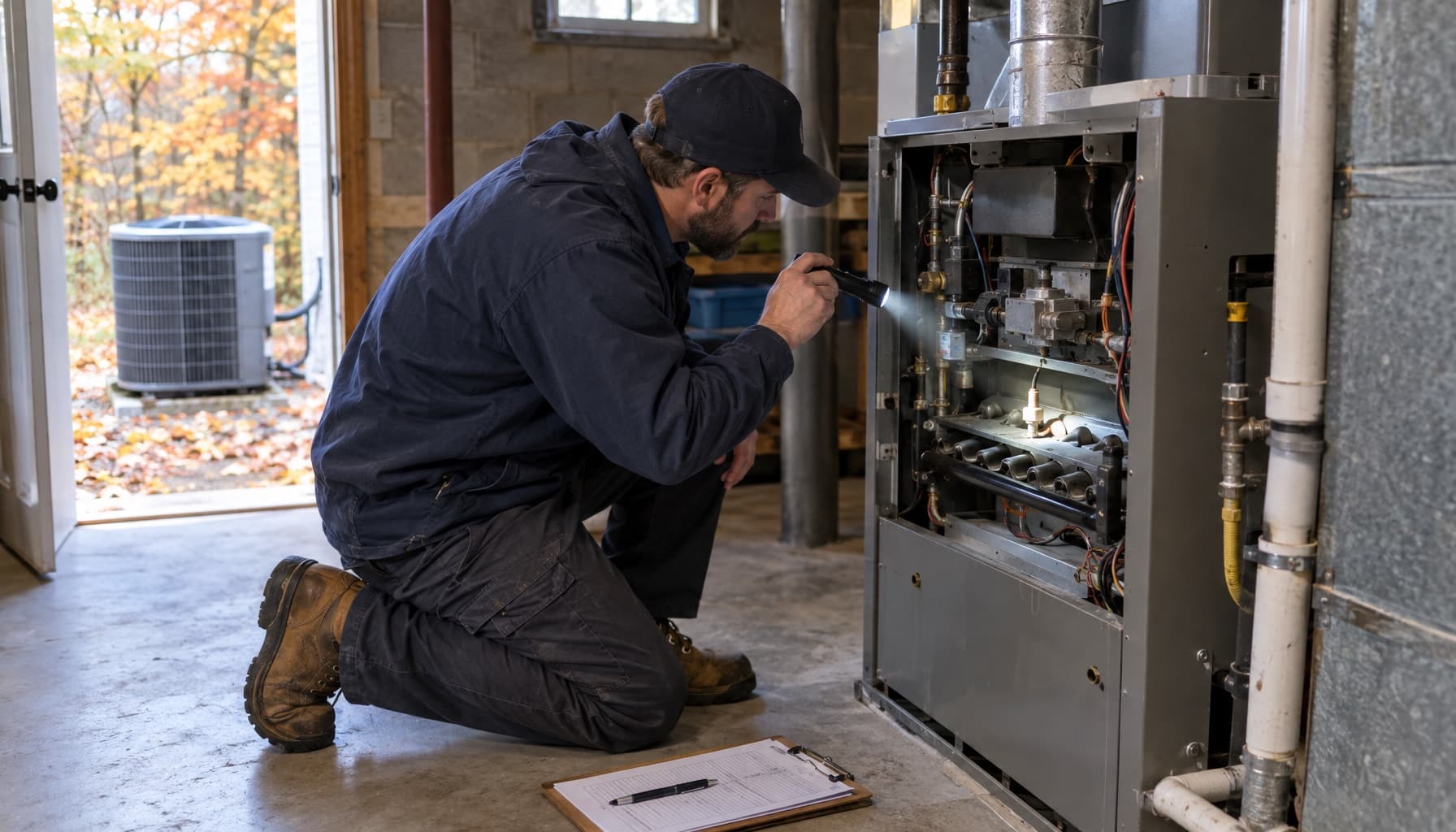
Search for heating and air conditioning business software and you get a pile of "best HVAC software" lists, mostly written by the vendors on them. They agree on the basics: a dispatch board, scheduling, estimates, invoicing, payments, a mobile app for the techs. Fine. Every product in the category does that.
What none of them test is the thing a heating and cooling shop actually fights twice a year. Your calendar doesn't fill gradually. It flips. One week you're running no-cool calls, and a few weeks later it's no-heat, and the same customer list is due for the other half of their maintenance agreement.
Why a heating and air conditioning business is a two-season business
A pure AC shop in Phoenix has one big season. A shop in the Midwest or Northeast has two, with a dead stretch between them. Trade press has described the slow period as the end of March into early April, plus part of the fall, and one contractor quoted in ACHR News put it at about two months. Southern shops flip the emphasis: summer is the money, and the mild fall is where they have to plan.
The tool a shop reaches for in that gap is the maintenance agreement. The standard setup gets a tech in the door once in the spring and once in the fall. ACHR News has also floated 500 agreements per service tech as a target, built on four calls a day, two demand and two maintenance. Treat that as a goal, not a norm. But the arithmetic is useful. Ten maintenance calls a week per tech means your agreement list is your schedule for the quiet months.
So the first question for any software isn't "does it schedule?" It's this: when October arrives, can it show you every agreement customer who's due, sorted by what you owe them and where they live, without someone building the list in a spreadsheet?
The test: can it handle the flip?
Run your own shop through these before you pay anyone.
- Spring and fall visits are different jobs. A cooling tune-up checks the coil, the charge, and the condensate line. A heating tune-up checks the heat exchanger, the igniter, the flame sensor, and combustion safety. If the agreement is one generic recurring visit, your tech has no checklist and the customer's record can't show which half was done.
- Equipment history carries over. The furnace and the condenser at one address are two pieces of equipment with two ages. The age drives the pitch. ACHR News describes tiers: zero to four years is add-on territory, four to nine is where duct and sizing problems show up, and nine plus is replacement talk. If the software can't hold equipment per site, the tech walks in blind.
- Open quotes survive the season. The cracked heat exchanger found in a September tune-up and the leaking coil found in April are both quotes that should still be sitting there when the customer calls back.
- The schedule bends for emergencies. In the first cold week you will have more no-heat calls than slots. A board that makes you drag scheduled tune-ups around by hand will cost you an hour a day you don't have.
The slow season is when you book the busy season's work, so your software had better know who's due.
Fall timing is a pricing lever, not just a courtesy
Contractor blogs make the same argument for late-summer tune-ups, and it holds up whether or not the source has something to sell. A worn belt or a weak capacitor caught at a scheduled visit gets fixed at standard rates. The same failure in January turns into an emergency call, and any part flagged then may be on backorder. You'd rather find it in September.
The practical version for a small shop: start booking the heating tune-ups before the first cold snap, and call the customers whose agreements lapsed or who never bought one after a repair. ACHR's slow-season advice treats these calls as service to existing customers, not cold calling, and gives examples worth stealing: systems ten years old with $500 or more in repairs over two years are the obvious list to pull. That only works if your customer records are searchable by equipment age and repair history. Most shops find out theirs aren't about the week they try.
What the comparison pages skip
You'll end up comparing the same names. A few honest notes.
ServiceTitan is built and priced for big fleets. Our breakdown of ServiceTitan alternatives for small shops covers that, so skip it here. Jobber and Housecall Pro are the usual small-shop picks, and both are calendar-first. On Housecall Pro's pricing page when we checked, the Basic plan at $59 a month billed annually has no QuickBooks Online sync and no service plans. Recurring service plans show up on the Max tier, at $299 a month billed annually for up to 8 users. Check the page yourself, because these tiers move. The point is that the feature a two-season shop needs most is the one that sits behind the top plan.
If you want the recurring-visit logic without buying a big system, read our HVAC scheduling software and maintenance agreements posts first. They'll tell you what to ask in a demo.
Where FieldCommerce fits
FieldCommerce is field service software for HVAC shops running 1 to 8 trucks, usually with the owner still in the mix. It was built around the gap this post describes: the recurring work that keeps a two-season shop alive.
Recurring contracts turn maintenance agreements into scheduled visits, so the October list builds itself instead of living in someone's head. Equipment is recorded on the job, and the AI drafts invoice lines from what the tech reports, with the owner reviewing before anything goes to the customer. Invoices and customers sync to QuickBooks Online. See the pricing page for what's included at each level.
It won't sell the agreements for you. Somebody still has to make the calls. But the list will be right when they pick up the phone.
If you're planning for the next flip, get started and load in your agreement customers, or see how a call runs on the HVAC vertical page.