
Electrician CRM Software: What Small Shops Actually Need
Electrician CRM software splits into sales pipelines and field apps. What a 1 to 8 truck shop needs to track quotes, follow up, and win repeat work.
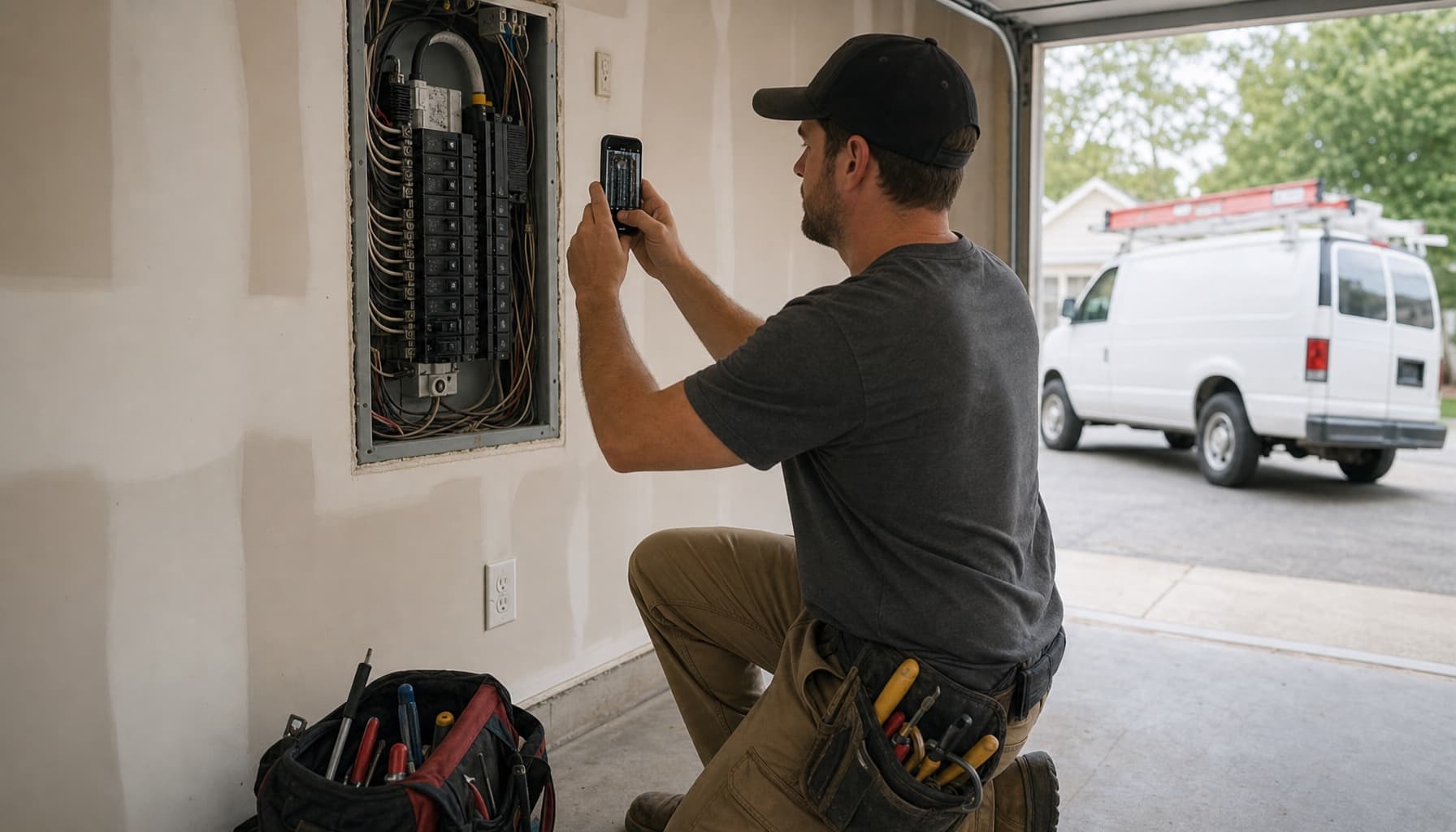
Search for an electrician CRM and the results split into two aisles that pretend the other does not exist. One aisle is sales software: Pipedrive, HubSpot, Capsule, each wearing an electrician landing page bolted onto a product built for people who sell to strangers over email. The other aisle is the field apps, which call their customer list a CRM and hope you do not ask what it actually remembers.
Behind the search is usually the same shop. Quotes live in a sent folder. Customers live in the owner's phone contacts, some under first names, some under the job, like "Westerville Panel Swap." The whiteboard knows this week and nothing else. Somewhere in that pile are a dozen open quotes nobody has touched in three weeks and two hundred houses that will need electrical work again whether you call them or not.
An electrician CRM remembers houses, not deals
Start with what the record has to hold, because this is where the sales-software aisle quietly disqualifies itself.
A software company's CRM tracks a deal: a stranger enters the pipeline, advances through stages, and either closes or dies. Done either way. An electrical service shop does not work like that. The unit of the relationship is the property, and the property has a memory. The 1970s panel with four breaker spaces left. The aluminum branch circuits you flagged during a service call and the homeowner said "maybe next year." The EV charger quote from March that went quiet. The Federal Pacific panel you photographed and warned them about, in writing, which is both a liability record and the warmest lead you own.
An electrician's CRM is not a pipeline of strangers. It is a list of houses you have already been inside, and a note on what you left behind in each one.
Every one of those notes is a future job with the sales work already done. You have seen the panel. They have seen your truck. The second visit to a known house closes at a rate no cold lead will ever touch, but only if the note exists somewhere a follow-up can find it, instead of in the memory of whichever tech crawled that attic.
The sales-pipeline aisle: cheap seats, double entry
The generic CRMs are not expensive. Pipedrive's entry plan runs $14 a seat a month on annual billing. HubSpot's free tier costs nothing and caps you at two users, one pipeline, and 1,000 contacts, a ceiling a ten-year-old shop's customer list sails past without noticing.
The price is not the problem. The problem is that the CRM knows nothing about the work. Your schedule, your quotes, your invoices, and your service history live in other tools, so every job has to be typed into the CRM a second time, by hand, by someone, after hours. Nobody in a four-truck shop is doing data entry at nine at night, so within a month the pipeline shows six stale deals and the tool joins the graveyard of software that was going to get the office organized. A CRM that depends on discipline you do not have is a subscription, not a system.
Electrician CRM software inside the field apps
The field apps hold the opposite cards. Jobber and Housecall Pro sit where the work happens, so the customer record fills itself as jobs run. That is the right shape, and it is why they are the tools most small electrical shops land on, a market we mapped in our electrical contractor software guide.
Read the plan grid before you celebrate. On Jobber's current pricing, the entry Core plan carries the contact list but not the behaviors that make a CRM pay: automated quote follow-ups and QuickBooks sync both arrive on the Connect tier, $139 a month, or $70 a month if you prepay the year. Marketing tools are a separate $99 a month add-on. The entry price buys a calendar with a rolodex. The follow-up engine, the actual reason a service shop wants a CRM, is metered two tiers up.
ServiceTitan has the deepest customer records in the trade, with equipment history and memberships wired all the way through. It also assumes a CSR desk, a dispatch chair, and an office that can absorb enterprise onboarding. At 30 trucks that is your shop. At four it is not.
Follow-up is the feature that pays for the rest
Here is why the follow-up engine deserves that much attention. Fire and Ice, a Columbus HVAC and electrical contractor, published a whole page explaining to homeowners why companies vanish after sending a quote, citing figures that 48 percent of salespeople never follow up at all and 44 percent stop after a single attempt. Homeowners are so used to contractors going dark that a company answering its own quotes counts as a marketing strategy.
Which means the bar is on the floor. The shop that sends a check-in three days after every open quote is not being pushy. It is often the only bidder still visible when the homeowner finally decides. We covered the mechanics of quotes that close in field service estimates that win, and the summary is blunt: an unanswered quote is not a no, it is a coin flip you stopped calling.
A CRM earns its keep twice. Once on open quotes, where the follow-up goes out on schedule without anyone remembering to send it. And once on the flagged-work list, where the aluminum wiring note from last spring turns into this winter's recall campaign. One panel change recovered from either pile is worth more than a year of any software on this page.
FieldCommerce treats that as the whole point. The CRM is not a module you fill in; it is the platform's memory. Calls, quotes, visits, photos, and invoices write the customer record automatically because they are the same system, and the AI reads it back when it matters: drafting the follow-up on a quote that has sat quiet, surfacing the houses with flagged work worth a call this season, briefing you before a visit on everything the shop already knows about that address. AI briefings and insights shows how the record gets used instead of stored, and the pricing is published, with nothing held behind a demo call.
Before you buy anything in either aisle, run one test on your current setup: how many open quotes over ten days old do you have right now, and how long did that number take to produce? If the answer is a shrug and an evening of digging, the tool has already told you what it remembers. See what a working memory looks like at FieldCommerce for electrical, or get started and let the record build itself from the next job in.