
Landscaping Business Software That Gets Seasonal Work
Landscaping business software built for repair trades misses routes, crews, rain days, and the spring rush. What software built for seasonal work looks like.
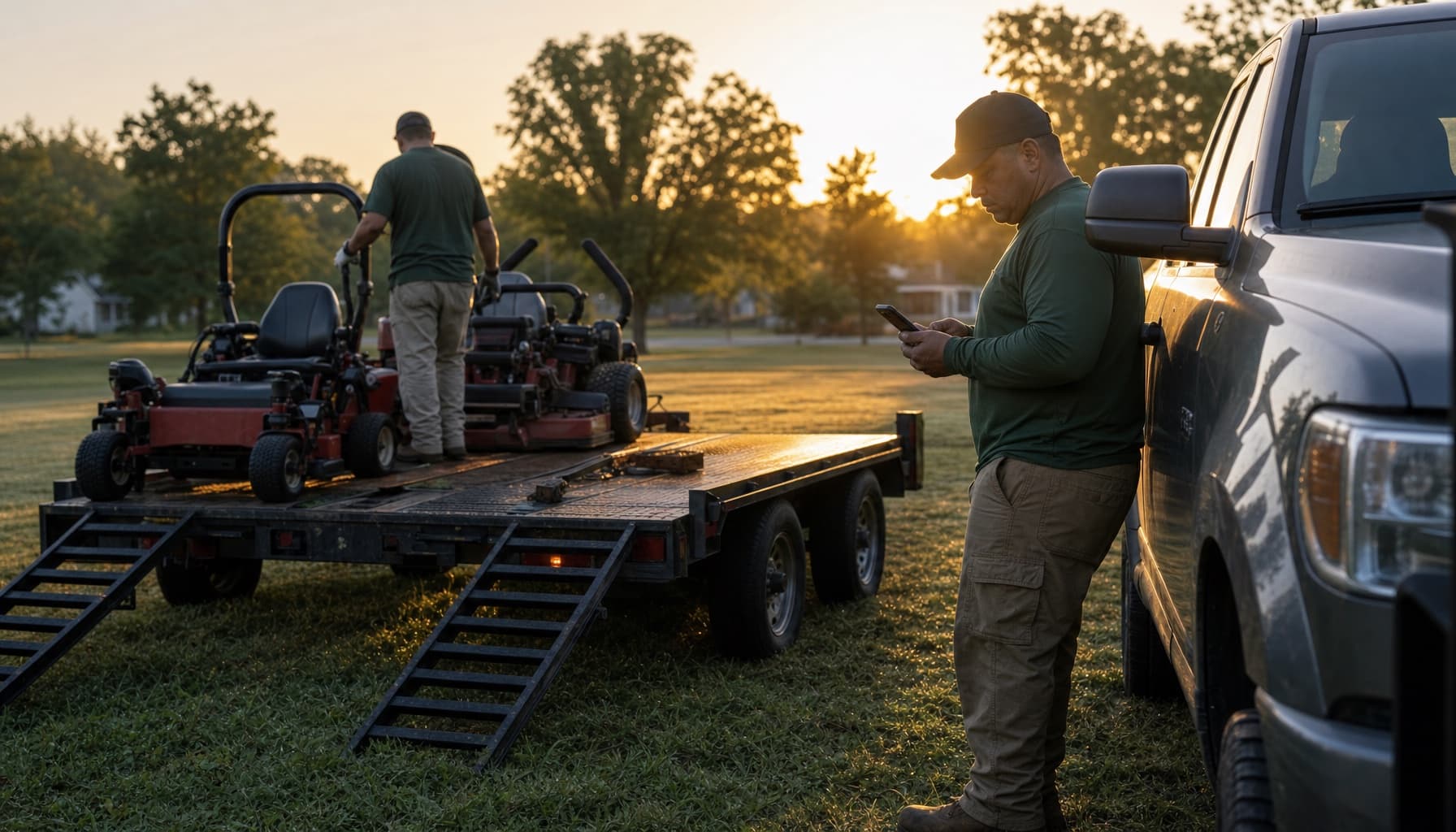
Most field service software was built for the repair trades. A customer calls, a tech rolls out, a problem gets fixed, an invoice goes out. That model works fine for a plumber. It falls apart the moment you run a mowing route. Landscaping is not one job at a time, it is forty lawns a week on a loop, a crew of three in one truck, an install that eats two full days, and a forecast that can wipe out Thursday before you finish your coffee.
If you have ever tried to run a landscaping company on a tool built for one-tech service calls, you already know the feeling. Every screen assumes a customer called you. Half your work is the opposite: nobody called, the grass just grew. This post walks through where generic tools break for landscaping, and what software actually built for the work looks like.
Why generic tools break for landscaping
The repair-trade model bakes in assumptions that are simply wrong for a mowing and maintenance operation.
- One tech, one job, one invoice. Your unit of work is a crew and a route, not a solo tech and a ticket. Assigning a three-person crew to 14 stops in tools built for solo techs means triple entry or fake workarounds.
- Every job is a one-off. Weekly mowing is not 26 separate jobs, it is one agreement that repeats. Software that makes you create each visit by hand turns a recurring contract into a data-entry chore.
- The schedule is stable. A repair shop's Tuesday mostly survives contact with Tuesday. Yours does not. One rain day does not cancel a job, it shoves the entire week sideways, and every downstream visit has to move with it.
- Billing follows the visit. Per-visit invoicing is the repair default. A big share of your book is monthly flat-rate maintenance where the customer pays the same in May as in August, and the software needs to know the difference.
None of that is a small gap you can work around with notes fields. It is a different shape of business, and it needs a different shape of tool.
The rhythms landscaping business software has to handle
Routes next to one-offs
Your week is two kinds of work living side by side. The recurring layer is the mowing routes, the base of the pyramid, dense and predictable. On top of it sit the one-offs: a cleanup, a mulch job, a patio install, an irrigation repair. Good software shows both on the same board, so when a two-day install lands, you can see exactly which route days it collides with and which crew can absorb it. Tools that treat everything as a one-off make you rebuild your routes constantly. Tools that only do routes cannot price or schedule the install work where your margin actually lives.
Crews, not solo techs
You assign a crew, a truck, and a route. The foreman runs the day. The software should think that way too: crew-level assignment, crew-level clock time, and a route sheet the foreman can run from a phone without calling the office. If you are checking in each crew member on each stop individually, the tool is fighting you.
The rain day cascade
Weather is the one everyone underestimates. A rain day is not one canceled appointment, it is a whole day of route stops that have to slide, without breaking the visits already scheduled behind them, and without skipping anyone two weeks in a row. Doing that by hand is an evening of text messages. Software built for landscaping does the cascade for you: push Thursday's route, and the system reflows the affected visits, keeps the geographic order intact, and flags any customer who would fall outside their service window. The same logic that runs a dispatch board without a dispatcher has to run at the level of whole routes, not single jobs.
The spring rush
A season's worth of clients onboards in about three weeks. Every renewal, every new signup, every "can you start next week" call hits between the first warm weekend and mid-April. If setting up a customer means creating dozens of visits by hand, spring becomes an office job right when you need to be on a mower. The tool should turn a signed agreement into a full season of scheduled visits in one step, and slot the new stop into the route where it makes geographic sense.
Landscaping is not a repair trade with grass. It is route logistics, crew management, and seasonal cash flow wearing work boots, and software that misses any one of those misses the business.
Billing that matches how landscapers actually charge
The other place generic tools quietly cost you money is invoicing. A landscaping book usually runs three billing models at once:
- Monthly flat rate for maintenance customers, the same amount every month regardless of visit count.
- Per-visit for cleanups, one-off mows, and à la carte work.
- Milestones and deposits for installs and hardscape projects.
Software built for per-visit invoicing forces double entry the moment flat-rate billing enters the picture: you track the visits in one place and run the monthly billing somewhere else, usually a spreadsheet and a prayer. The right tool bills each customer by their agreement automatically, so a flat-rate client never gets a surprise per-visit invoice and a one-off cleanup never slips through unbilled. Unbilled work is the silent killer here, and it shows up directly in your days sales outstanding when you finally chase it down weeks later.
Then there is the winter cliff. Revenue that runs hot from April to October and drops off a ledge in November is survivable only if you plan for it: snow contracts where you have them, fall cleanups booked before the leaves drop, and prepaid season plans sold in winter at a small discount so cash lands in the months the mowers are parked. Your software should make all three easy to sell and bill, because the shops that smooth the cliff are the ones still making payroll in February.
What this looks like when the software fits
This is the gap we built FieldCommerce to fill for maintenance operations: route-based scheduling that holds recurring visits and one-off installs on the same board, crew assignment instead of solo-tech tickets, a rain-day reflow that reschedules a whole route in one move, and billing that runs flat-rate, per-visit, and milestone work side by side without double entry. The features are the same discipline throughout: respect how the work actually flows instead of forcing a repair-trade shape onto it.
If you run crews and still run a mower yourself, the test is simple. Count the hours you spent last spring rebuilding the schedule after rain and hand-creating visits for new clients. That is the time the right landscaping business software gives back.
See how it fits your operation at FieldCommerce for lawn maintenance, or get in touch before the next spring rush hits and the phone starts ringing all at once.