
Electrician Dispatch Software for Shops Without a Dispatcher
Electrician dispatch software for 1 to 8 truck shops: triage no-power calls, survive the runaway troubleshoot, and dispatch from the van without a dispatcher.
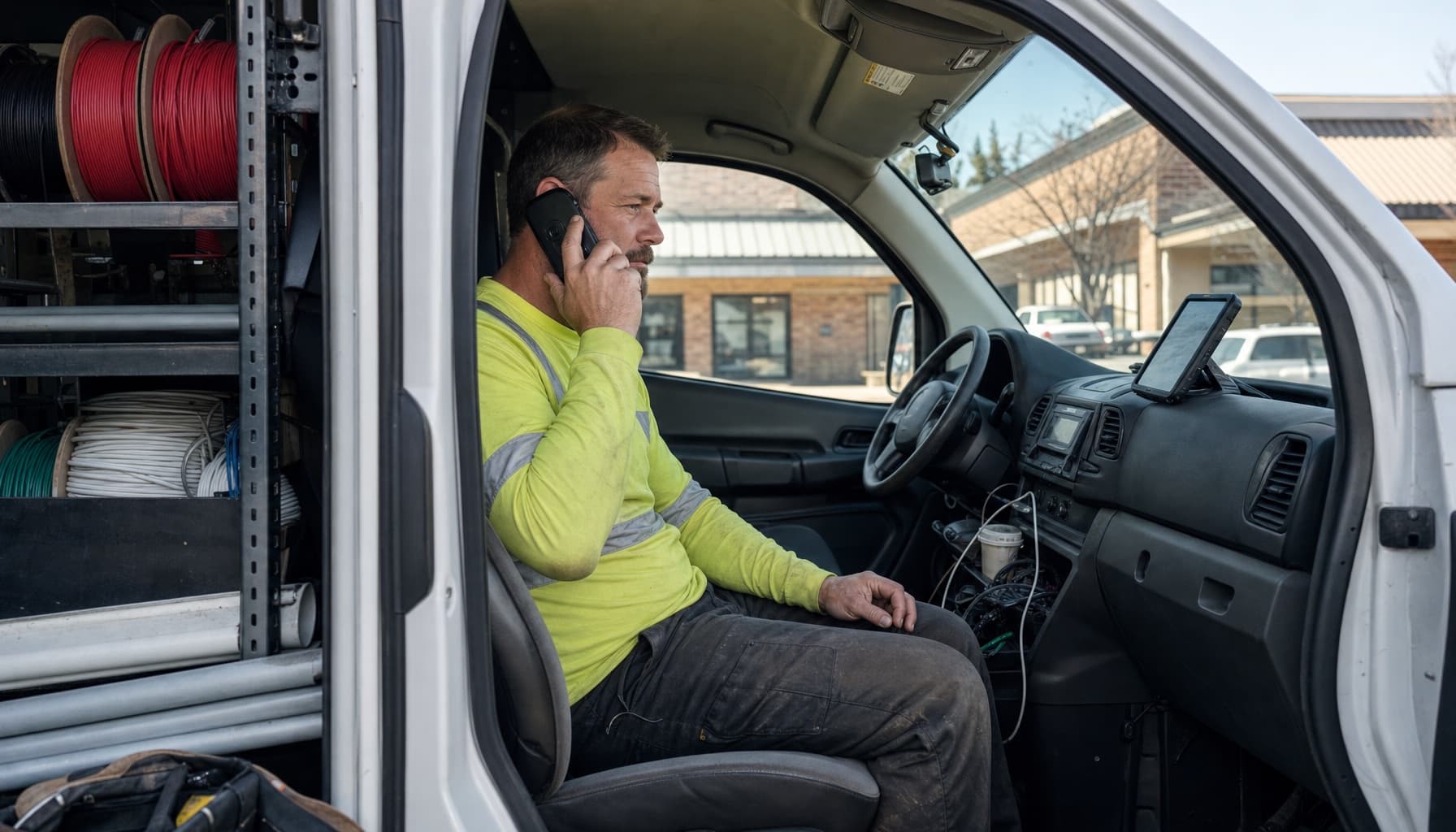
Monday night you build the week. Tuesday morning it starts lying to you. The 8am troubleshooting call was sold as a diagnostic hour, and at 9:40 your journeyman is still chasing an intermittent fault through a 1970s ranch. At 11:15 a property manager calls with half a strip mall dark and a bakery watching its coolers warm up. The 1pm panel change has not moved. The apprentice is standing in line at the supply house. Every one of those collisions now needs a decision, and the person making it is you, from the cab of a van, with a meter still in your other hand.
That gap between the plan and the day is what dispatch actually means. Scheduling is deciding what the week should look like. Dispatch is defending it call by call. In a shop running 1 to 8 trucks there is no dispatcher at a desk doing that defense. There is only you, between pulls.
Dispatch is not scheduling with a different name
We wrote separately about why generic calendars fail electrical scheduling: mixed job durations, inspection windows the county picks, license rules about who can run what. That is the planning problem, and it happens the night before.
Dispatch is the daytime problem. A call comes in at 11:15 and somebody has to decide, in about two minutes, whether it outranks what three trucks are already doing. A tool can be decent at the calendar and useless at that moment. Most are, because the calendar is easy to build and the moment is not.
What electrician dispatch software has to do before lunch
Triage the call at intake
Electrical calls are not equal, and your customers cannot grade them for you. A burning smell at the panel, an outlet hot to the touch, half the house suddenly dark: that call rolls now. A flickering fixture in the hallway can hold until Thursday. Software should capture severity the moment the call lands, as a field that drives the board, not a sentence buried in notes. And it should capture the call at all. When a genuine emergency rings while you are elbow-deep in a ceiling, that caller dials the next shop in the list, which is the whole arithmetic behind what a missed call costs a trades business. People with a real emergency expect a truck in 30 to 90 minutes in most metro areas. They do not wait for a 6pm callback.
Know who can legally take it
The nearest truck is not always an answer. In most jurisdictions your second-year apprentice cannot run a solo service call, and even where he could, you know which faults he is ready to chase alone. Dispatch software that ignores license and skill tags will happily suggest an assignment that is a code violation with a drive time attached. The right suggestion is the qualified tech who can be there soonest, and the software should do that math, not you.
Show live status, not last-known
"Where is everybody" should never be a group text. The board needs each truck's current job, how far along it is, and drive time to the new call from where the truck actually sits. Ten minutes of calling around to build that picture is ten minutes the bakery spends finding another electrician.
Survive the runaway troubleshoot
This is the electrical-specific one. Diagnostic time in this trade is honestly open-ended; an intermittent fault does not care that you quoted an hour. When the troubleshoot runs to four, the board has to show you the damage and the options in one view: what the journeyman was supposed to do next, which of those jobs can slide, and who else could absorb the 1pm. Without that view you are doing capacity math in your head while driving, and that math is how the wrong job gets dropped.
The troubleshoot does not care what your calendar says. Dispatch software exists for the four hours after the diagnosis was supposed to be finished.
Move the customer without another phone call
Every reshuffle touches a customer. The 1pm panel change that becomes a 3pm needs a text with the new window, and the emergency caller needs an on-my-way message with a name and a face. If the software reflows the board but leaves the customer notifications to you, it solved the cheap half of the problem.
The electrician dispatch software you can actually buy
The starter apps are the honest budget answer, up to a point. Jobber publishes its pricing and runs month to month, which we respect. But route optimization and GPS tracking only come with its Grow plan at $149 a month, and even then what you have is a calendar that shows where everyone is. Triage, license rules, and the reshuffle when a troubleshoot blows up stay in your head. Housecall Pro sits in the same band: fine at booking the work, quiet at the 11:15 moment.
At the other end, ServiceTitan's dispatch product is real. A live board, SMS job confirmations, route optimization, all of it built around an operation with a dedicated dispatcher who owns that screen all day. It does not publish pricing, and it is sized and priced for fleets big enough to staff that desk. If you are running four trucks and wiring half your own calls, you are not that operation, and paying as if you were does not make you one.
If you are weighing the whole stack rather than just dispatch, we compared the full field in the best electrical contractor software for small shops.
Which leaves the actual question for a small electrical shop: who does the dispatcher's thinking when there is no dispatcher?
Dispatching from the van
That question is the reason FieldCommerce exists. We wrote about the general shape of it in how to run a dispatch board without a dispatcher; for an electrical shop it gets concrete. The board scores an incoming call against severity, drive time, and each tech's license and skill tags, then suggests who rolls and what it costs the rest of the day. When the troubleshoot runs long, it shows the collision and the reflow options instead of leaving you to rebuild the afternoon from memory. Customer texts go out with every change.
The test is not a feature list. It is Tuesday. Count how many times last week you made a dispatch decision from a driver's seat with incomplete information, and what one wrong one cost.
Electrician dispatch software FAQ
What does electrician dispatch software actually do?
It defends the schedule while the day attacks it. Scheduling builds the week the night before; dispatch software triages the 11:15 emergency against what three trucks are already doing, checks who is licensed to take the call, shows live truck status instead of last-known, and texts every affected customer when the board reflows. If a tool only shows a calendar, it is scheduling software wearing the wrong name.
Is electrician dispatch different from HVAC or plumbing dispatch?
The bones are the same, but two things are trade-specific. License and skill rules decide who can legally run a solo call, so assignment suggestions have to respect them. And diagnostic time is open-ended in electrical work; an intermittent fault can turn a quoted hour into four, so the board has to show you the damage and the reflow options, not just the original plan.
What should a 1 to 8 truck shop pay for dispatch software?
Less than a dispatcher's salary, which is the alternative it replaces. The starter apps put route visibility behind their upper tiers, and the enterprise boards are priced for fleets that staff a dispatch desk all day. Look for month-to-month terms sized for an owner who runs calls too.
See how it handles an electrical week at FieldCommerce for electrical, or get started and bring us the day that fell apart. That is the one worth fixing.