
Electrical Contractor Compliance Documentation Software
Compliance documentation software for electrical contractors: the three paperwork layers a 1 to 8 truck shop must produce, and why the job record is the base.
Search "compliance documentation software for electrical contractors" and look closely at who page one was written for. The top tools automate "the collection, validation, and renewal tracking" of certificates of insurance, licenses, and safety credentials, with upload portals for subcontractors and expiration alerts at 60, 30, 14, and 7 days out. Read that sentence again from the right side of the table. Those are products for general contractors and property managers to vet their electrical subs.
You are not the customer of that software. You are its content.
Which matters, because the shop typing that search is usually a 1 to 8 truck electrical contractor who just received a compliance packet request from a GC or a national facilities account and wants to stop assembling it by hand at 9pm. The tools that rank solve the requester's problem. The contractor's problem, producing the stack on demand without hiring an office manager to babysit it, is a different job with different rules.
What compliance documentation software for electrical contractors tracks today
The GC-side platforms are at least useful as a checklist, because they show you exactly what you will be asked to produce. The standard packet: an ACORD 25 certificate of insurance covering general liability, auto, and umbrella. A workers' comp certificate. Additional insured endorsements, usually CG 20 10 for ongoing operations and CG 20 37 for completed operations. A W-9. The master license the permit gets pulled under. Increasingly, proof of an NFPA 70E-based safety program before anyone badges onto a commercial site.
Here is the honest assessment: that list is the easy third of compliance. Almost all of it is company-level paper that already exists somewhere. Your insurance agent generates the COI in an afternoon. The license is framed on the wall. What the portals never ask for, and what actually protects the license on the wall, is everything underneath.
The three layers of the electrical compliance stack
Layer one is credentials, and they expire on a schedule. Not just the contractor license. Every journeyman and master on the payroll renews individually, and most states attach continuing education to it. Texas is typical: TDLR requires 4 hours of CE before each renewal, covering the NEC, state electrician law, administrative rules, and NFPA 70E electrical safety. A licensed hand whose renewal lapses is a truck you cannot legally send to a permit job, which makes CE dates a dispatch fact, not an HR fact.
Layer two is the safety program. NFPA 70E expects the employer to maintain a written electrical safety program, audit that program at intervals not exceeding three years, and audit field work against it at least annually. Most five-man shops do not have this on paper until the first commercial GC's safety officer asks for it, and then it becomes the document blocking a badge. It is worth writing before someone makes you.
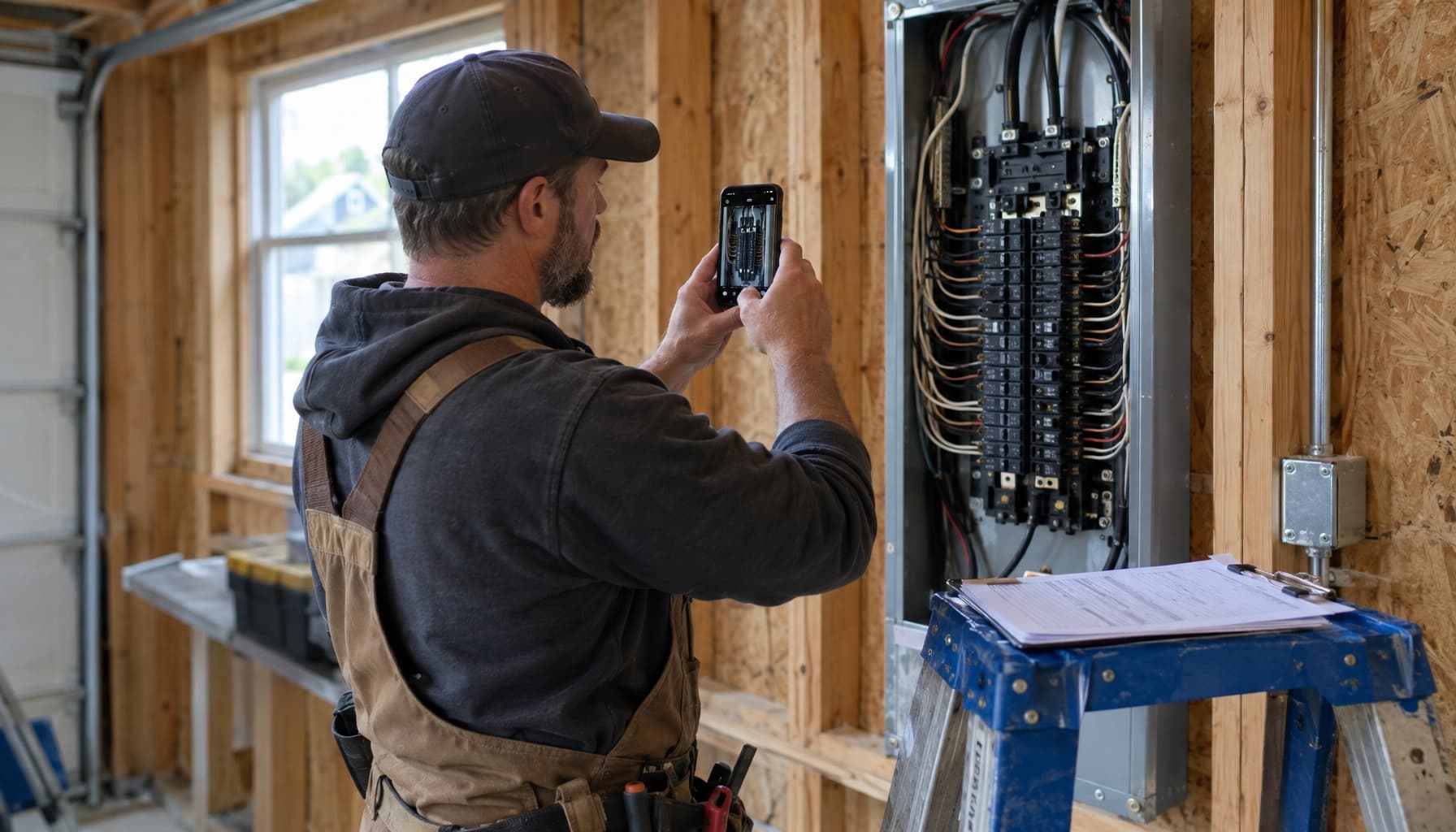
Layer three is job records, and this is the layer that defends you. Which permits were pulled, under whose number, what the inspector passed or corrected, photos of what is behind the drywall, who was on site and what they found and fixed. The Mike Holt forums carry a steady traffic of threads from contractors who learned this the hard way, including one whose permit number was used by someone else to wire a building. The license holder answers for everything under that number. The contractors in those threads converge on the same advice: keep records of the work you actually did, because nobody else will keep them for you.
The permit carries your license number, not your memory. When a question surfaces three years after the drywall went up, the inspector has moved on and the homeowner remembers it wrong. The only story that survives is the one your records tell.
Code versions make layer three heavier than it looks. As of early 2025, 17 states enforced the 2023 NEC, 21 were still on 2020, six on 2017, and two as far back as 2008, while states like Arizona, Illinois, and Missouri push the choice down to individual counties and cities. A shop working both sides of a metro line can wire under two different code editions in the same day. Your job record is what ties each install to the code that was in force when you closed the wall.
Compliance documentation software for a 1 to 8 truck shop is mostly a good job record
So should a small electrical contractor buy a dedicated compliance platform? At 30 trucks, with a safety manager and an office staff to feed it, probably. At 3 trucks, a standalone compliance system is one more login and one more unstaffed admin job, the same trap we keep flagging in feature-heavy platforms. Ask the question that sorts every tool for a small shop: who operates this, and when? If the answer is the owner, at night, it is not compliance software. It is homework with a subscription.
The workable answer at this size has two parts. The thin top layer, COIs and license renewal dates, is a calendar and an insurance agent. The thick bottom layer, the job records, should not be a separate system at all. It should be a byproduct of running the work: the permit number and inspection result living on the ticket, photos attached before the insulation goes in, the tech's name and license on the dispatch, the found-and-fixed story in the close-out notes. Shops that run a dispatch board that knows licenses get half of this for free, because the right card landing on the permit job was enforced before the truck rolled.
This is the shape FieldCommerce was built around. Every job is one record from the first call to the cleared payment. The board knows which techs hold which license, so the apprentice never ends up alone on the ticket the inspector reads. The tech talks through what he found and fixed, and the AI drafts the close-out notes and invoice lines from his own words while he is still in the driveway, photos attached. Nobody sits down to "do compliance documentation." The file builds itself while the details are still true, which is the only time records are worth anything.
When the next GC packet request lands, you assemble it from records that already exist instead of reconstructing last spring from a text thread.
See how the whole record works at FieldCommerce for electrical, or get started before the next permit gets pulled under your number.